Ladakh, Northern India: What to Expect and How to Prepare
6 minutes read
by Isabelle de Braux
Ladakh sits in the far north of India, where the Himalayas meet the Tibetan plateau and the landscape opens into something wide, spare, and defined by a particular stillness.
It is one of the highest inhabited regions on earth. Villages are scattered across glacial valleys, sustained by snowmelt and centuries-old farming systems.
Life here moves in rhythm with land and season, and the place has a quality that is increasingly hard to find — genuine distance from the usual routes.
It also asks something of you before it gives anything back. That is worth knowing before you go.
The Altitude Is Not Incidental
Leh, the main town and the entry point for most journeys, sits at 3,524 metres. The flight from Delhi takes an hour. The adjustment takes longer.
Most travellers experience some combination of slower breathing, mild fatigue, and a dull pressure in the head during the first 24 to 48 hours. For most this passes with rest and hydration. For some it does not, and pushing through it is the single most common mistake first-time visitors make.
The first day in Leh should involve nothing strenuous. This is not a suggestion — it is the difference between a good trip and a difficult one. Build at least two full rest days into the start of any Ladakh itinerary. The body needs time to adjust before you ask anything of it.
Diamox is commonly prescribed as a prophylactic and worth discussing with your doctor before travel. Hydration matters more than most people expect at altitude — the air is dry and the body loses water faster than it signals thirst.
When to Go to Ladakh
The main travel window is June to September, when the passes are open and conditions are settled across the valley.
July and August are warmest and best for trekking and river activities. The villages in the Sham Valley are at their most alive — barley fields approaching harvest, irrigation channels running full, the days long and clear.
September is the month experienced Ladakh travellers tend to return to. The summer groups have thinned, the air is cleaner, and the light in the valley has a quality that is worth seeking out specifically. The harvest is underway. Apricots dry on rooftops. The landscape is in its most productive and visually rich season.
October is possible but requires preparation. The nights become cold quickly above 3,500 metres and some routes begin to close from mid-month. The monastery circuit around Leh — Thiksey, Hemis, Likir — is excellent in October. Most other activities are winding down.
Winter closes most of Ladakh. The exception is the Chadar Trek in January and February, walking the frozen Zanskar River — a serious undertaking suited to experienced cold-weather travellers only.
What the Landscape Is Actually Like
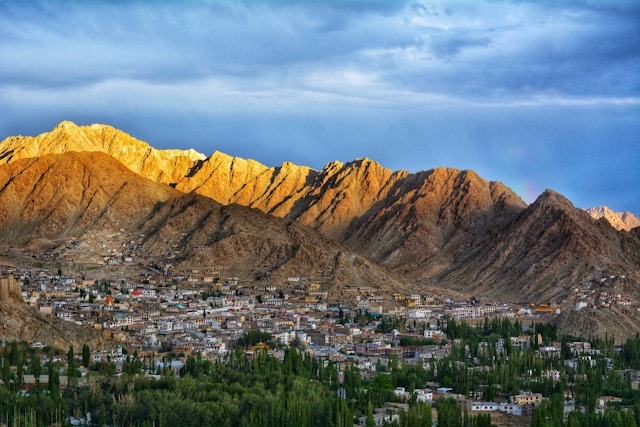
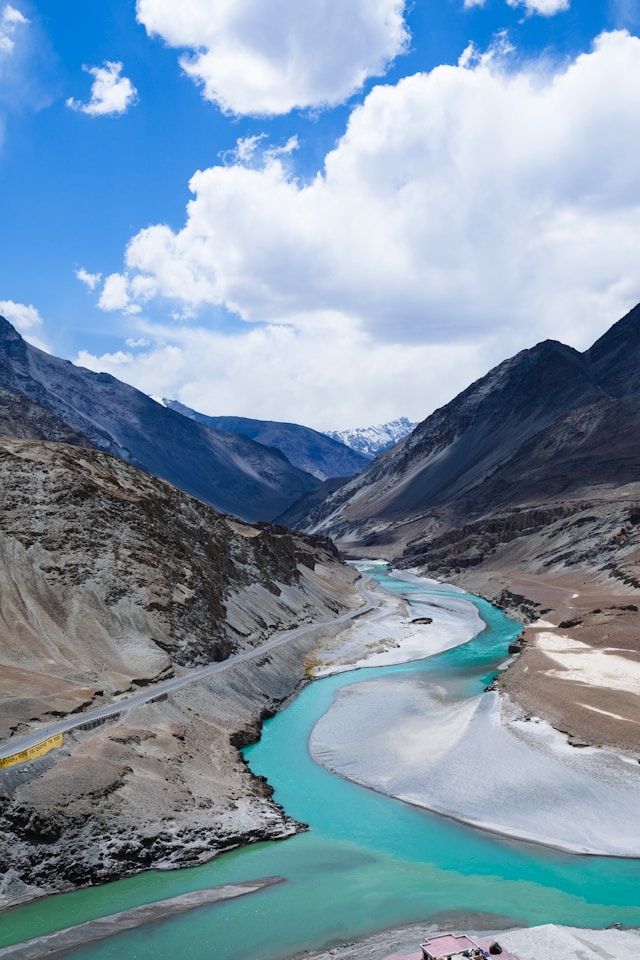
Ladakh is not lush. It is not the green Himalayan landscape of Nepal or Bhutan. It is high-altitude desert — brown and ochre slopes, wide valleys, a sky that feels closer than it should. The rivers, fed by glacial melt, are what make any of it habitable. They run through the landscape like an argument for life in an otherwise unlikely place.
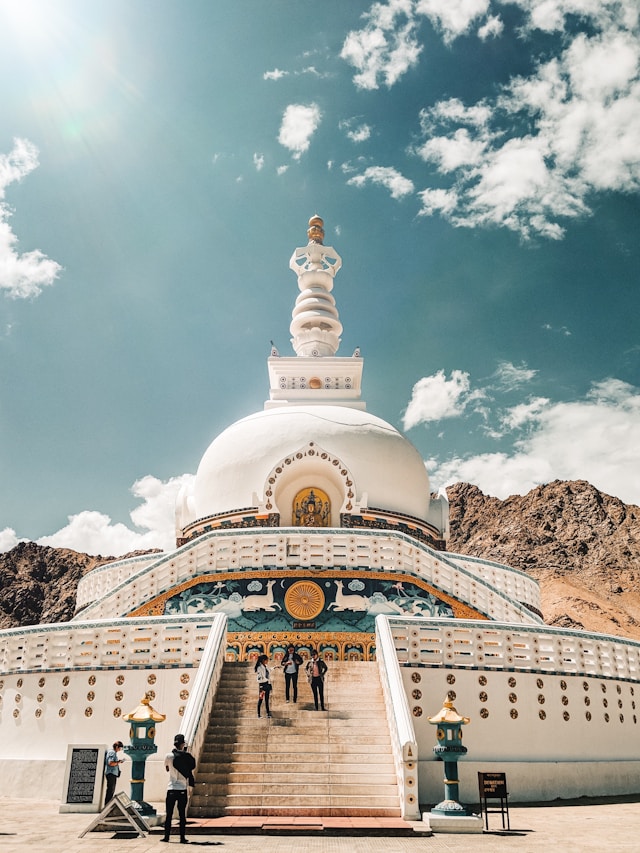
The Sham Valley to the west of Leh is where most trekking itineraries begin — a route through small agricultural villages connected by ancient trading paths, walking at a pace the altitude naturally enforces. The villages are quiet and spacious, with mud-brick homes and kitchen gardens fed by narrow water channels. The Indus Valley to the east is where the major monasteries sit — Thiksey rising in whitewashed tiers above the valley floor, Hemis set back in a gorge, Likir on a ridge with a large gold-plated Buddha facing west.
The Zanskar River, reached by driving south from Leh, runs through a canyon carved by glacial flow over millennia. Rafting here is a different experience from the trekking — remote, physically engaging, the canyon walls rising steeply on both sides with no road or village visible. It is one of the more affecting things you can do in northern India.
The People of Ladakh
Ladakh is predominantly Buddhist, with a significant Muslim minority in Leh and the western valleys. The two communities have coexisted here for centuries.
The Ladakhi people have a quality of quiet warmth that takes a day or two to become apparent. In the villages, hospitality is genuine rather than arranged — meals cooked on wood stoves, evenings that settle into conversation and silence in roughly equal measure. The women of the valley play a central role in daily life, managing the domestic routines that depend on the water systems that run through every home and field.
Spending time in village homestays rather than hotels is the single best decision a first-time visitor to Ladakh can make. Not because the accommodation is special, but because of what it gives you access to.
What to Bring on a Trip to Ladakh
Layers matter more than weight. Days in July and August can reach 25 degrees in the valley; nights at altitude drop to single figures. A good down jacket, worn in the evenings and on the water, is the piece of kit most travellers wish they had brought sooner.
Sun protection at altitude is serious. The UV index at 3,500 metres is significantly higher than at sea level. Sunscreen, a hat, and UV-blocking sunglasses are not optional.
For trekking, broken-in hiking boots with ankle support matter on uneven terrain. Trekking poles help, particularly on descents.
Carry cash. Most village homestays and small businesses do not accept cards.
Ready to Adventure?
Whether you’re joining a group trip, traveling as a couple, or flying solo, we’re ready to help you experience Ladakh in a way that feels personal, meaningful, and unforgettable. From the winding mountain roads to the quiet monasteries and vast, star-filled skies—this is a journey that stays with you long after you leave.
If Ladakh is calling your name, don’t ignore it.
Reach out to us to start planning your adventure, ask questions, or simply chat about what’s possible. Your next great story begins here.
Let’s make it happen.

Amala Travel
+65 6734 0370 info@amaladestinations.com
IATA : 96601131
TA License: TA02145
Proud Members of Serandipians