Bhutan Travel: Amala’s Know Before You Go
6 minutes read
by Isabelle de Braux
Bhutan is one of the few places that genuinely delivers on its reputation. The landscapes are as dramatic as you’ve heard, the culture as intact, the pace as unhurried.
But it rewards those who arrive prepared, and those who arrive with the right expectations.
Planning Your Bhutan Travel: The Basics
Bhutan controls tourism deliberately. All visitors (except Indian, Bangladeshi, and Maldivian nationals) must book through a licensed operator and pay a Sustainable Development Fee, currently USD 100 per person per night. This isn’t a visa fee; it’s a levy that funds free healthcare and education for Bhutanese citizens. Worth understanding before you arrive.
The currency is the Bhutanese Ngultrum, pegged to the Indian Rupee. USD and INR are accepted at most hotels. Credit cards work at the larger properties, Amankora, Six Senses, Gangtey Lodge, but carry cash for smaller purchases and markets.
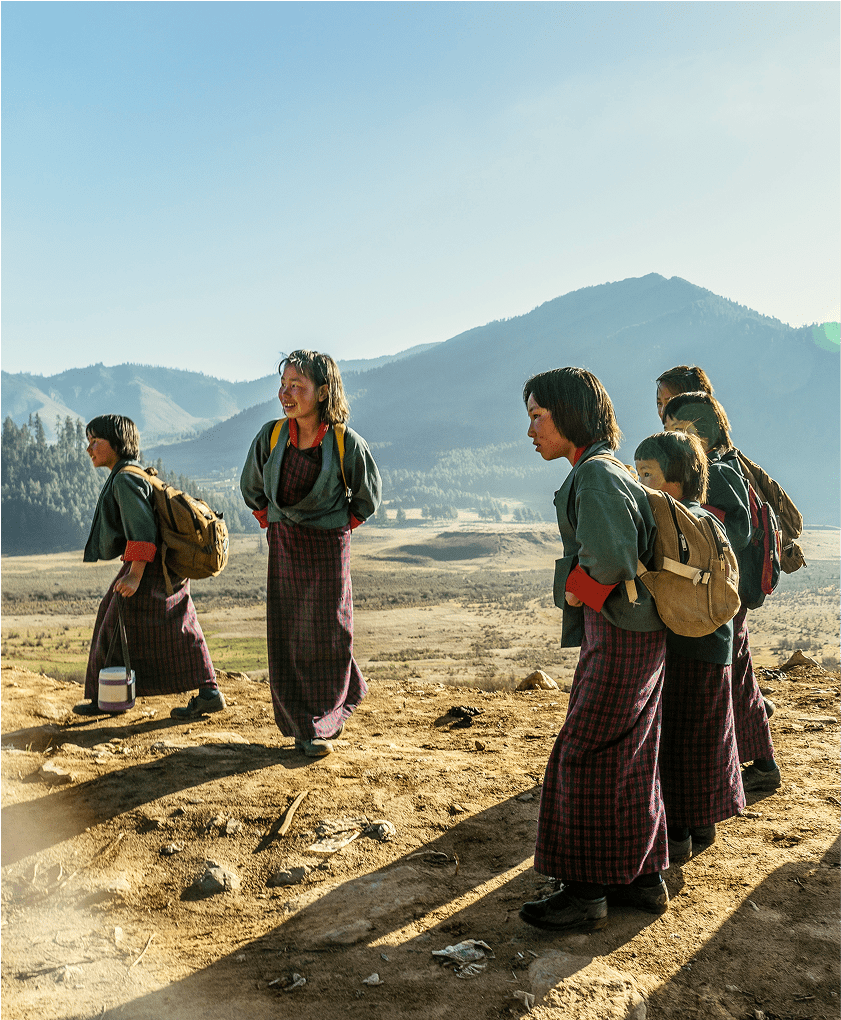
The official language is Dzongkha, but English is widely spoken, particularly among guides and hotel staff. Bhutanese people are quietly warm, reserved at first, generous once the ice breaks.
Bhutan Food, Altitude, and What to Expect
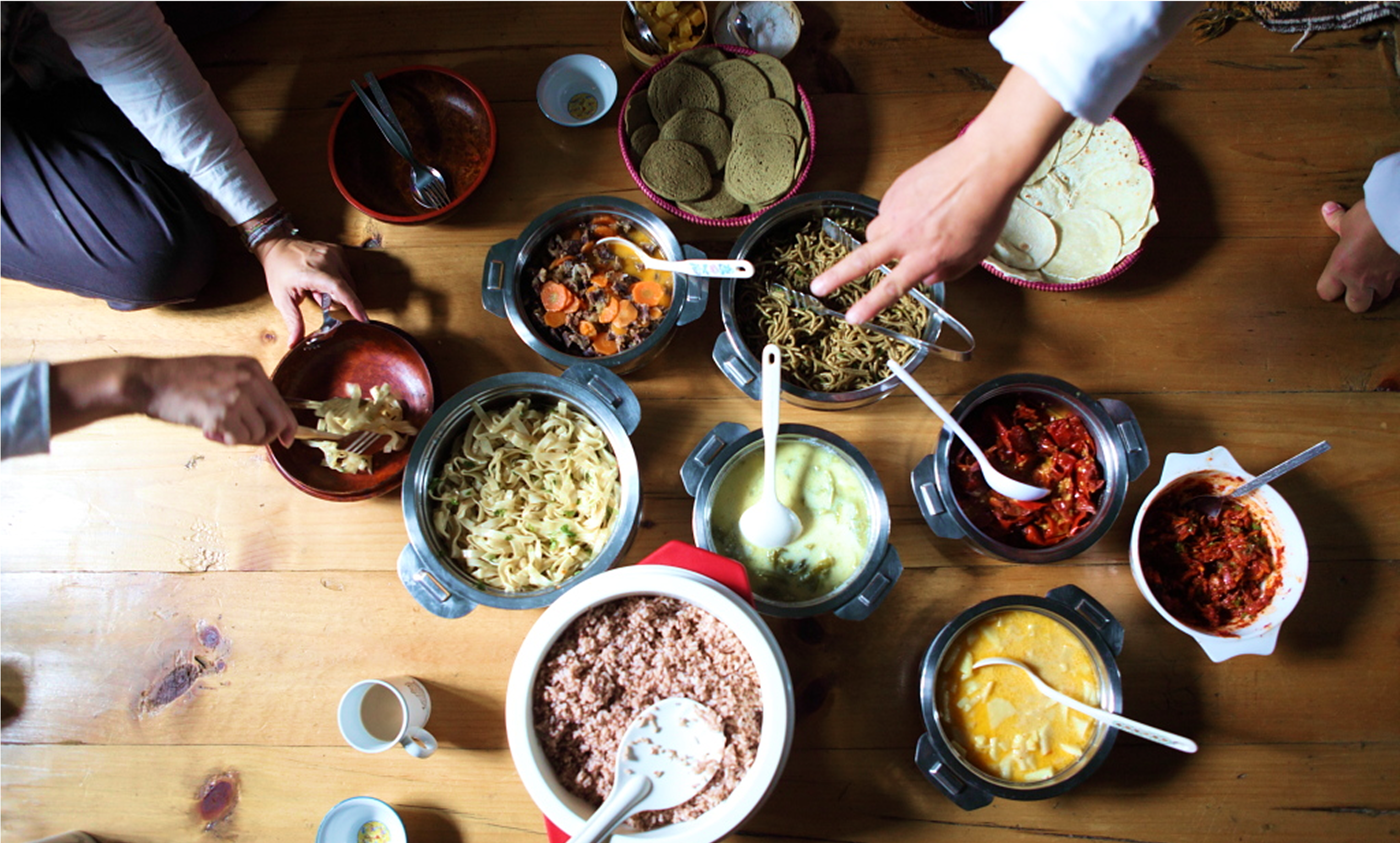
Bhutanese food is built around chilli. Ema Datse, a stew of green chillies and soft cheese, is the national dish and appears at almost every meal. It is spicier than it looks. Red rice, buckwheat noodles, and pork are staples.
The food is honest and satisfying, though a week in, some travellers find themselves missing variety.
Altitude is a real consideration. Thimphu sits at 2,334 metres, Paro at 2,200 metres. Most people acclimatise without difficulty, but if you’re adding high-altitude hikes like Longtey in Phobjikha (which reaches 4,000 metres), build in rest days and ascend gradually.
The best time to visit Bhutan is whenever you can! Many will argue that spring (March to May) or autumn (September to November) are some of their favourite seasons: spring brings rhododendrons in flower across the hillsides. Autumn offers clear skies and the best mountain visibility.
Winter is quieter and cold, particularly above 2,500 metres, but it’s what we call the secret season. The skies are blue and the air is crisp and comfortable for hiking. Festivals like the Punakha Tshechu make it worthwhile.
Summer brings monsoon rains and lush landscapes, but some trails become difficult.
Getting to Bhutan from Singapore
Drukair operates twice-weekly direct flights from Singapore to Paro on Thursdays and Sundays. The flight takes roughly five hours.
Alternatively, you can connect through Bangkok, Delhi, or Kathmandu, which opens up more schedule flexibility.
Paro International Airport is one of the most technically demanding in the world. The approach threads through a narrow valley, and only a handful of certified pilots are cleared to land there. Worth knowing if you’re a nervous flyer.
The views on descent, pine forests and dzong walls visible from the window, make it one of the more memorable arrivals in Asia.
Where to Stay in Bhutan
The lodge circuit in Bhutan is genuinely exceptional.
Amankora has five properties across the main valleys, each positioned to make the most of the surrounding landscape.
Six Senses integrates wellness into the journey across its five beautiful lodges.
Gangtey Lodge sits above Phobjikha Valley with unobstructed views.
Pemako in Punakha offers a quieter, more intimate option and absolutely underrated, in our opinion.
AndBeyond is another fantastic collection, offering spacious suites across several valleys.
All of these properties are bookable through Amala, and because of our relationships with each, we’re able to help you structure the right combination depending on your itinerary and travel style.
What to See in Bhutan
Most itineraries cover the western valleys: Paro, Thimphu, Punakha, and Phobjikha and Bumthang. Each has a distinct character which you can read more about in our full-length article on what to see in Bhutan.
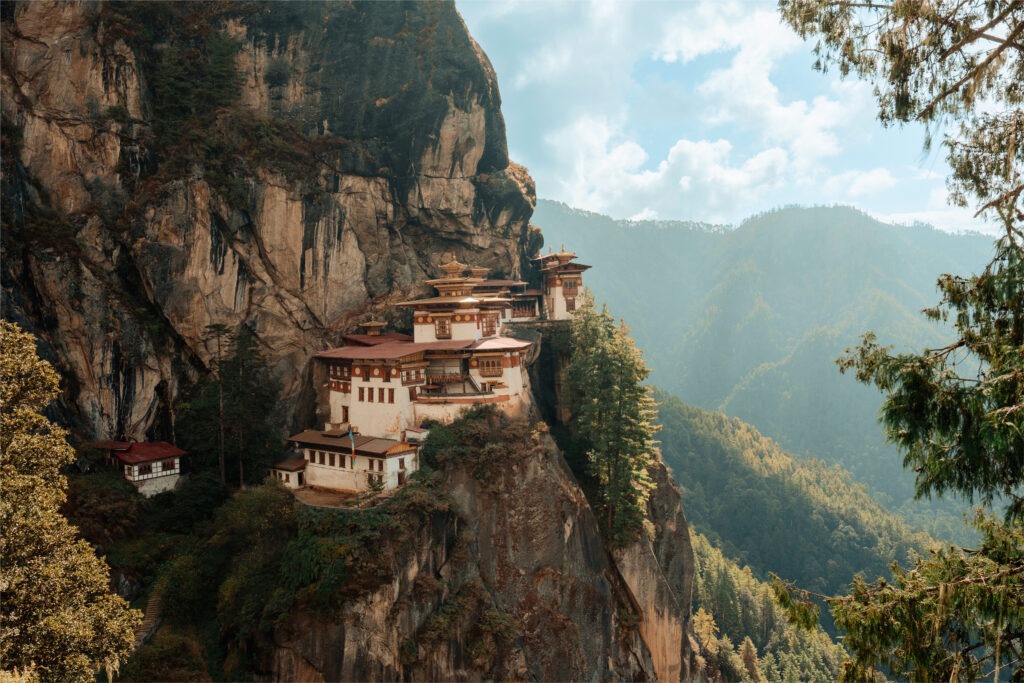
Paro is where you land, and where Tiger’s Nest sits above the valley on a cliff face at 3,120 metres. The hike takes two to three hours each way and is the single most visited site in the country. Go early to beat the groups.
Punakha Dzong, at the confluence of two rivers, is arguably the most architecturally striking building in Bhutan. Visit between December and February and the jacaranda trees in the courtyard are in bloom.
Phobjikha Valley (or Gangtey, as we refer to it) is where the Black-Necked Cranes arrive each October from the Tibetan plateau, spending winter before returning in March. Local legend holds that they circle Gangtey Monastery three times before landing.
Whether or not you time your visit around the cranes, the valley is worth the detour.
If Bhutan is calling…
Bhutan travel rewards patience and preparation. It is not a destination you pass through quickly.
Give it at least seven days, ideally ten, and let the pace of the place set in. If you’re considering Bhutan for the first time, or returning after years away, we’d be glad to help you plan it properly. Journey with us.

Amala Travel
+65 6734 0370 info@amaladestinations.com
IATA : 96601131
TA License: TA02145
Proud Members of Serandipians